


Article Sidebar

This work is licensed under a Creative Commons Attribution 4.0 International License.
The fight against corruption has become a common goal of the people and government agencies in Uzbekistan.
Abstract
The image of our country on the world stage has completely changed as a purpose of the principles of openness and equal cooperation in domestic and foreign policy pursued in Uzbekistan in recent years.
Keywords:
How to Cite
The image of our country on the world stage has completely changed as a purpose of the principles of openness and equal cooperation in domestic and foreign policy pursued in Uzbekistan in recent years.
The international community is watching with interest every action and direction of reforms of the Uzbek side. In this regard, the main attention is paid on issues like ensuring human rights, the formation of an active civil society, the creation of conditions for freedom of speech, growth in the economic sector and the welfare of the population.
It is noteworthy that in the process of dialogue with foreign experts and international partners we found out that our reforms in the fight against corruption are also highly evaluated.
President Shavkat Mirziyoyev has made the fight against corruption one of the priorities of state policy. Structural and organic changes have taken place in this area as well as in all areas.
In particular, reforms in such areas as improving the legal framework, creating an institutional foundations for combating corruption, digitalization of sectors, ensurance of transparency of public administration bodies activities and ensuring the principle of inevitability of punishment.
Below we will focus on the most important purposes of these directions.
Improving the legal framework for combating corruption
Over the past period, Uzbekistan has become an active participant in the global anti-corruption process and is strengthening the relevant legal framework at the national and international levels.
The accession of the Republic of Uzbekistan to the United Nations Convention against corruption in 2008 and the accession to the Istanbul action plan of the Anti-Corruption Network of the Organization for Economic Cooperation and Development in 2010 were one of the main and important steps on the international level.
In order to organize the fight against corruption at the national level, the necessary measures and a set of national legislation have been adopted and a national legal doctrine in this area has been formed.
For example, the Law on Combating corruption, State Anti-corruption programs for 2017-2018, 2019-2020 and 2021-2022, as well as more than 80 normative and legal acts in the field of prevention and combating corruption have been adopted. In particular, the Laws on Public procurement, the Law on Administrative procedures, the Law on
Public-Private partnerships, the Law on Dissemination and Use of Legal Information, and the Law on Public oversight are essential in that they serve to ensure economic growth through the fight against corruption.
At the same time, a number of important documents were adopted in 2021 to combat corruption and ensure the openness of government agencies.
In particular, the Presidential Decree "On additional measures to ensure the openness of government agencies and organizations, as well as the effective implementation of public control" has been adopted, which brought the openness and transparency of the system of government agencies to a new level.
At the same time, in July 2021, two important documents were adopted by the initiative of the President, the Presidential Decree "On measures to create an environment of intolerance to corruption, drastically reduce corruption factors in public administration and expand public participation in this regard" and the Presidential Decree "On additional measures for the effective organization of anticorruption activities”.
These documents provide for institutional changes in a comprehensive approach to combating corruption.
They include both preventive mechanisms to combat corruption and mechanisms to ensure the inevitability of punishment for corrupt practices and increase the responsibility and accountability of public servants.
It should be noted that documents introduced such internationally recognized standards, modern preventive mechanisms, such as ensuring greater openness in the activities of public authorities, creating the system of declaration of property and income of public servants, the establishment of more transparent public procurement, prevention of conflicts of interest, and open competition in the recruitment to the civil service.
The institutional framework for combating corruption is being formed
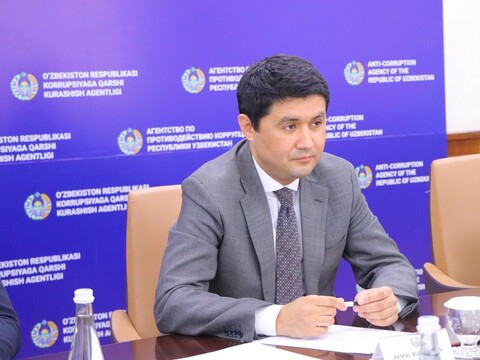
On June 29, 2020, two important documents promoting the development of anti-corruption – the Presidential Decree of the Republic of Uzbekistan “On additional measures to improve the anti-corruption system in the Republic of Uzbekistan” and the Presidential Law “On the organization of the activities of the Anti-Corruption Agency of the Republic of Uzbekistan” were adopted. With these documents, a new state body that will implement the state policy aimed at preventing and combating corruption – the Anti-Corruption Agency was established.
This Decree ensured the implementation of Articles 6 and 36 of the Convention against corruption of the United Nations (hereinafter referred to as the UN), which requires the establishment of a specially authorized state body to combat and prevent corruption in an independent state.
The Agency has been designated as a specially authorized state body responsible for ensuring the effective interaction of government agencies, the media, civil society institutions and other representatives of non-governmental sector, as well as international cooperation in this area.
The Agency directly reports to the President and is accountable to Parliament.
Implementation of state policy in the field of prevention and combating corruption, systemic analysis of the state of corruption in the country, ensuring the effectiveness of anti-corruption expertise of regulations and their drafts, development of international cooperation in preventing and combating corruption and strengthening the country's image have been identified as the main tasks and areas of activity of the Agency.
The Decree mentioned above also established the National Anti-Corruption Council.
Its main task is to coordinate the activities of bodies and organizations involved in and participating in the fight against corruption.
In order to carry out the same task at the regional level, regional anti-corruption councils were established.
In the field of combating corruption, effective mechanisms are being introduced to eliminate the causes and conditions of this trouble , in line with foreign practices.
In 2020-2021, measures have been taken to gradually establish internal anti-corruption control systems in all public and economic administration bodies. As a result, the timely identification and elimination of corruption risks, the elimination of its consequences, the causes and conditions that allow them, the areas in which corruption risks may occur are being identified.
Digitalization and ensuring openness as key tools to prevent corruption
Systematic work is being carried out in our country to introduce openness in public administration, bringing the state of openness of information for public use, the level of openness and quality of information in line with international requirements, the digitization of all services.
Ina short amount of time, online platforms have been launched that allow for public discussion of draft normative-legal acts, watching and real-time tracking information on public budget and debt, as well as on public procurement. The activity of the open data portal has reached a qualitatively new level, the Single interactive portal of public services, the electronic.
It should be noted that the following practical results have been achieved as a result of these reforms.
First, practical measures have been adopted to ensure the freedom of the media, journalists and blogers, the openness of government agencies to the public and the media, and the establishment of close communication and cooperation with journalists in the day-to-day activities of head officials.
Second, the widespread use of digital and online technologies has increased the accountability of government agencies to the public. Sale of land plots and state assets, as well as a number of other property through online auctions, electronic notarial systems have been established and are constantly being improved.
Third, the openness and transparency of the activities of government agencies and organizations ensure freedom of access to information. As a result of disclosure of all necessary information, reports, information on financial expenses, decisions of governors with respect to the activities of organizations, effective public control is established.
Fourth, the process of appointment of civil servants is open to all and is carried out on a competitive basis and any citizen has the opportunity to observe these processes.
Fifth, Public Councils have been established under each state body, including law enforcement agencies, the Council of Ministers of the Republic of Karakalpakstan, regional and Tashkent city khokimiyats. Of course, such councils are becoming an important link in establishing effective public control over the activities of government agencies.
The main tasks set in the near future in the fight against corruption
Of course, the fight against corruption requires implementation of regular changes and updates. The disaster of corruption will defeat those who are left behind the speed of the time.
Therefore, we still have a number of important tasks ahead of us. licensing system and the portal of public appeals “My opinion” have been launched.
In particular, from 2022, a system for declaring the income and property of public servants will be introduced. In this regard, the Anti-Corruption Agency, together with the relevant departments, has developed a draft law regulating this industry.
It is planned to adopt a long-term and medium-term National Strategy to combat corruption, which reflects all our goals, and its initial draft was discussed with the participation of experts, scientific circles and academia and non-governmental non-commercial organizations.
Work is underway to launch an open electronic register of people found guilty of corruption crimes. This institution also provides an opportunity to involve the general public in the process of preventing corruption.
Besides, a system for assessing the prevalence of corruption in government agencies, including in the regions, is being introduced. An important aspect of this system is that surveys are to be conducted among the general population, business entities, including enterprises with foreign investment in Uzbekistan, local and international experts, and the analysis of the results of surveys shall determine the combating of corruption in government agencies and regions.
Implementation of measures will continue to bring anti-corruption legislation in line with international standards and to implement some provisions of the United Nations Convention against Corruption in our national legislation, as well as implementation of measures within the Istanbul Action Plan for Eastern Europe and Central Asia Anti-Corruption Network of the Organization for Economic Co-operation and Development.
Indeed, every reform, change that are being carried out in our country is being implemented upon selection through the prism of the benefit to our people. This is extremely important in anti-corruption processes. After all, the fight against corruption and its elimination have become a common goal of the people of Uzbekistan and government agencies.